

.jpg)
James Burton
Current Ranking
James Burton is ranked #95 of 162 guitarists on the Greatest Guitar Player leaderboard, based on our editorial score until fans weigh in. On the country and roots leaderboard, James Burton ranks #6 of 11. No fan votes yet, so be the first to rate James Burton on 8 attributes at greatestguitarplayer.com/vote.
Biography
James Burton is the Master of the Telecaster, the most recorded and most imitated country-rock session guitarist who ever lived, and the man Elvis Presley personally called when he needed a band for his 1969 return to the stage. Burton led Elvis's TCB Band from that Las Vegas opening night until the final show in 1977, and before that his crisp, stinging Telecaster licks powered Ricky Nelson's hits and one of the most famous riffs in early rock and roll. In 2001 he was inducted into the Rock and Roll Hall of Fame by Keith Richards, one devoted student honoring the source.
He was born August 21, 1939 in Dubberly, Louisiana and grew up in Shreveport, where he was gigging so young that he joined the house band of the Louisiana Hayride radio show in his early teens. At 15 he came up with the swampy, serpentine guitar figure that became Dale Hawkins's "Susie Q", a riff so foundational that Creedence Clearwater Revival built a career-launching cover around it a decade later. Ricky Nelson heard the kid from Shreveport and hired him in 1958, and Burton, still a teenager, moved to California and lived with the Nelson family while cutting classics like the "Hello Mary Lou" solo that guitarists have been lifting ever since.
Through the 1960s Burton became one of the busiest session players in Los Angeles, appearing on records for Merle Haggard, Buffalo Springfield, Judy Collins, and countless others, and holding down the house band on the TV show Shindig. Here is the gem: Bob Dylan wanted Burton for his first electric touring band in 1965, and Burton had to turn him down because of his television commitments. Four years later the phone rang again, this time it was Elvis, and Burton said yes, assembling the TCB Band himself and strapping on the pink paisley Telecaster that became one of the most recognizable guitars in music history.
After Elvis's death Burton barely slowed down. He anchored Emmylou Harris's legendary Hot Band, played the haunting leads on Gram Parsons's GP and Grievous Angel, spent more than a decade as John Denver's guitarist, and cut King of America with Elvis Costello. In 1990 Fender honored him with the first signature Telecaster model the company ever made. He is a member of the Rock and Roll Hall of Fame and the Musicians Hall of Fame, and his James Burton Foundation has put guitars in the hands of thousands of Louisiana schoolkids. Now in his eighties and still playing, Burton remains the standard by which chicken pickin' is measured, the sideman so good that the spotlight found him anyway.
Legendary Performance
Elvis's Comeback Opening Night, Las Vegas
July 31, 1969 · The International Hotel, Las Vegas, Nevada
When Elvis Presley decided to return to live performance in the summer of 1969, after eight years lost to Hollywood movies, everything depended on the band. Elvis called James Burton personally and asked him not just to play lead guitar but to help assemble the group, and Burton built what became the TCB Band. On July 31, 1969 at the brand new International Hotel in Las Vegas, the biggest showroom in the city, Elvis walked out in front of two thousand people for his first full concert since 1961, with Burton's Telecaster at his right hand.
The stakes could not have been higher. Critics were openly wondering whether Elvis still mattered in the era of Woodstock, and the answer came inside the first few bars. Driven by Burton's slashing fills on "Blue Suede Shoes" and the new maturity of "Suspicious Minds", the show was a triumph, the reviews were rapturous, and the engagement shattered Las Vegas attendance records. The residency that followed redefined what a live rock and roll show could be, and Burton's playing, precise, fiery, and endlessly musical, was its engine. He stayed at that post through every jumpsuit year, every tour, and every live album until Elvis's final concert in 1977.
The opening night matters historically because it is the moment the greatest icon in rock history bet his legacy on a live band and won, and the guitarist he trusted with that bet was James Burton. The King of Rock and Roll needed a comeback, and he hired a sideman so good that guitar players in the audience often watched stage right instead of center stage.
▶ Watch on YouTubeGear
Pink Paisley Fender Telecaster (1968)
Known for: the entire Elvis TCB era, the most famous paisley guitar ever
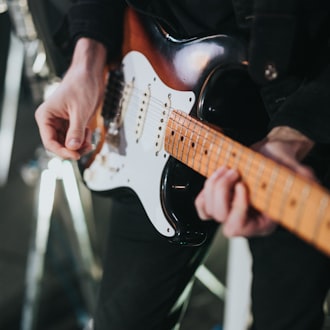
The pink paisley Fender Telecaster Burton played with Elvis is one of the most recognizable instruments in music history, a flower-wallpaper finish Fender offered briefly in 1968 that Burton turned into a legend under the Vegas lights. Through that guitar came the stinging fills and rapid-fire runs of the entire TCB era, and the sight of the paisley Tele at stage right became as much a part of the Elvis show as the jumpsuits.
His Telecaster story starts much earlier, though, with the early 1950s blackguard Tele he played as a teenager on Susie Q and through the Ricky Nelson years. Burton has said the Telecaster suits him because it is honest, every nuance of the fingers comes straight through, which is exactly what a player with his touch wants. In 1990 Fender made him the first artist ever honored with a signature Telecaster model, and the James Burton Telecaster remains in the catalog today, paisley flames and all.
Fender Twin Reverb
Known for: clean headroom that keeps every picked note articulate
Burton's amp story is clean American headroom, most famously Fender Twin Reverbs, whose loud, clear, unclipped voice let every hybrid-picked note snap and every double-stop ring without mushing into distortion. Country picking at his level depends on articulation, and a Twin at stage volume reproduces the attack of the pick and the pop of the bare fingers with nothing smeared.
Across a sixty year session career he used whatever the room required, but the constant is that the amplifier stays out of the way. Burton's tone is in his hands, his light strings, and his bridge pickup, and the amp's job is to make all of that louder without editorializing.
Essentially None, Guitar Into Amp
Burton's signal chain has always been essentially nothing: guitar, cable, amplifier, with at most a touch of slapback echo in the studio. The percussive cluck, the bent-behind notes, and the singing sustain all come from technique rather than pedals. For a player whose vocabulary is built on the precise attack of pick and fingers together, effects would only blur the very thing that makes him identifiable. His rig is one of the great arguments that tone lives in the hands.
Signature Technique
Chicken Pickin' & Hybrid Picking Mastery
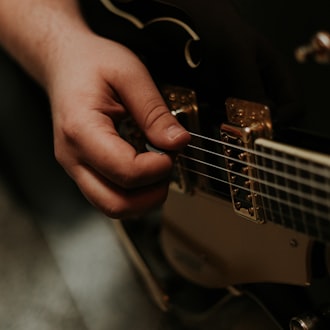
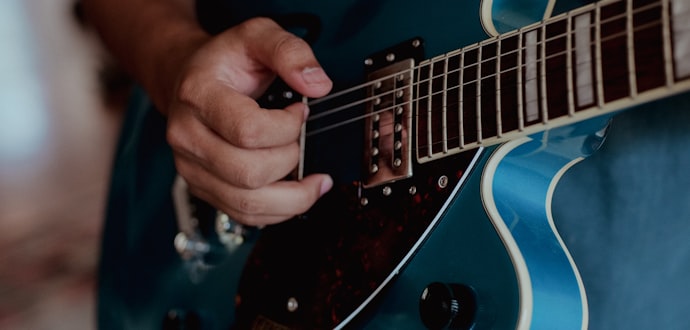
James Burton is the defining master of chicken pickin', the hybrid technique where a flatpick and bare fingers work together, snapping strings against the frets for a percussive cluck between cleanly picked notes. His right hand mixes flatpicked lines, fingerpicked rolls, and muted ghost notes into phrases that bounce and sputter like a percolating drum pattern, and that rhythmic snap is instantly recognizable within two notes on any record he ever played.
The left-hand secret is famous: as a teenager Burton started stringing his Telecaster with banjo strings to get gauges far lighter than anything sold for guitar, letting him bend full steps and beyond with pedal-steel smoothness. Those slippery, vocal bends, often woven inside double stops so one note holds while another curls up to meet it, let him imitate the steel guitar lines of the country records he grew up on. Listen to the solo breaks on Ricky Nelson's "Hello Mary Lou" or his showcase spots in the Elvis live albums and you hear bends that seem to defy the instrument's mechanics.
He is also one of the great fill players in history, a master of saying something perfect in the two beats between vocal lines. Decades of session work taught him economy: the lick that frames the singer instead of fighting them, the intro figure that brands the song in three seconds. That discipline is why everyone from Gram Parsons to Elvis Costello wanted him specifically.
The lineage he started runs through virtually every country and country-rock lead player since: Albert Lee, Vince Gill, Marty Stuart, and Brad Paisley all speak of him as the source, and rock players from Keith Richards to Jimmy Page grew up copying his Ricky Nelson solos note for note. Chicken pickin' existed before James Burton, but he is the one who turned it into a language.