
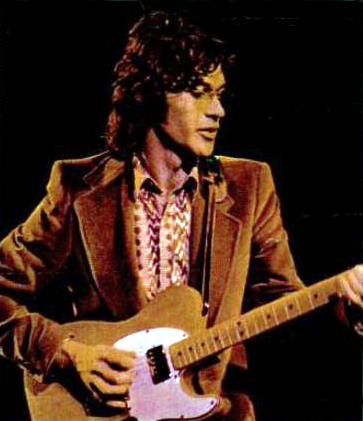

Robbie Robertson
Current Ranking
Robbie Robertson is ranked #136 of 162 guitarists on the Greatest Guitar Player leaderboard, based on our editorial score until fans weigh in. On the country and roots leaderboard, Robbie Robertson ranks #11 of 11. No fan votes yet, so be the first to rate Robbie Robertson on 8 attributes at greatestguitarplayer.com/vote.
Biography
Robbie Robertson, born in Toronto, Canada in 1943, was the guitarist and principal songwriter of the Band, and one of the most tasteful, evocative, and song-serving guitarists in the history of rock. In an era of flashy solos and endless jamming, Robertson took the opposite path, playing with restraint, nuance, and a deep sense of storytelling, proving that the right note in the right place could be far more powerful than a flurry of them.
Robertson came up as a young hotshot guitarist before learning the value of subtlety, and his playing with the Band became a master class in serving the song. On classics like The Weight, Up on Cripple Creek, and The Night They Drove Old Dixie Down, his guitar work is woven seamlessly into the rich, rootsy, distinctly American tapestry of the music, full of warm tone, sly pinch harmonics, and economical, perfectly judged lead lines. He treated the guitar as one voice in an ensemble rather than a vehicle for showing off, and that selflessness is exactly what made his playing so distinctive and so admired by other musicians.
Here is the gem that placed him at a pivotal moment in music history. Before the Band became famous on their own, Robertson and his bandmates served as Bob Dylan's backing group during his groundbreaking and hugely controversial move from acoustic folk to electric rock in the mid-1960s. Robertson's guitar was right there through the storm of booing from outraged folk purists, including the legendary night a heckler shouted Judas at Dylan, as the band played on with defiant power. That experience, backing Dylan through one of the most important and turbulent transformations in popular music, helped forge the Band's chemistry and placed Robertson at the very center of rock's evolution.
Robertson was also a gifted songwriter whose narrative, character-rich lyrics gave the Band's music its literary depth, and he helped orchestrate their legendary farewell concert, immortalized in the celebrated concert film The Last Waltz. Later he composed evocative film scores and pursued solo work, always with the same understated artistry. A Rock and Roll Hall of Fame inductee, Robbie Robertson is revered as a guitarist who understood that music is about more than technique, that taste, restraint, and storytelling are their own kind of mastery. He is the model of the guitarist as a servant of the song, and few have ever done it better.
Legendary Performance
The Band at Woodstock, 1969
The Band's performance at Woodstock in August 1969 stood apart from almost everything else on that weekend's bill. Where most acts played at the festival's epic scale, the Band played to the audience as if they were in a saloon. Robbie Robertson's guitar was restrained, economical, and in total service of the ensemble, a philosophy that made him one of the most distinctive guitarists of his generation.
Robertson played a Fender Telecaster and a Gibson ES-345, choosing his moments with a craftsman's instinct. His solos were brief and melodic, his rhythm playing supportive and rhythmically inventive. He was more interested in where not to play than in filling every bar.
The Band's Woodstock performance introduced a huge audience to a different possibility: that rock and roll could have roots, could be deliberate and considered, could draw from Americana traditions without nostalgia. Robertson's guitar was the linchpin of that argument.
▶ Watch on YouTubeGear
Fender Telecaster • Gibson ES-345 • Fender Combo • Touch Dynamics • Americana Tone
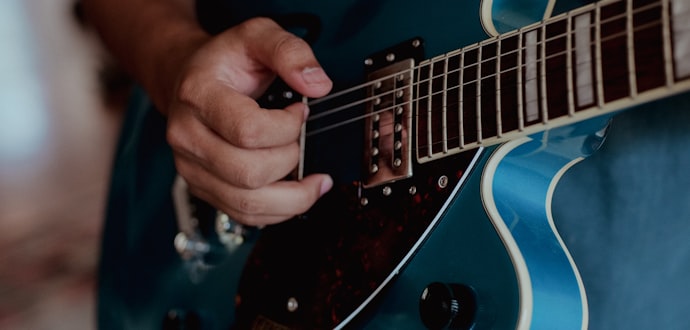
Robbie Robertson played two guitars that appear throughout the Band's career: a Fender Telecaster and a Gibson ES-345. The Telecaster was his primary instrument for the rootsy, twangy textures that suited the Band's Americana aesthetic, its bright neck pickup producing the warm but defined tone his melodic rhythm style required.
The Gibson ES-345 gave him a fuller, more complex sound for certain lead passages, the semi-hollow body adding resonance and sustain that the solid Telecaster couldn't match. Robertson was selective about which instrument suited each song, and his choices reflected genuine musical thinking rather than habit.
His amplification was typically a Fender combo, kept at moderate volume to preserve the guitars' natural character. Robertson was not a high-gain player. His tone was about touch and dynamics, and he could produce a wide range of sounds through pick angle, picking position, and right-hand pressure rather than through amplifier settings.
Signature Technique
Restraint, Touch & Melodic Economy
Robbie Robertson's technique is defined by what he chooses not to play. In an era when guitar solos were expected to be long, loud, and demonstrative, Robertson developed a style of extreme economy: short melodic phrases, careful dynamic variation, and a rhythm playing approach that complemented the ensemble without dominating it.
His picking technique varies with context: for rhythm work, he uses a relatively flat pick angle that produces a warm, slightly muted attack; for single-note lines, he adjusts to a sharper angle for more articulation. This small adjustment, made unconsciously by experienced players, gives Robertson's tone a consistency across different registers that makes his playing identifiable even out of context.
Robertson's use of dynamics within a solo is masterful. He begins phrases quietly and builds to emphatic accents, or reverses the dynamic arc for surprise. He treats the guitar more like a voice than an instrument, considering each phrase in terms of what it communicates rather than what it demonstrates.