


Lou Reed
Current Ranking
Lou Reed is ranked #121 of 171 guitarists on the Greatest Guitar Player leaderboard, based on our editorial score until fans weigh in. On the punk, grunge and alternative leaderboard, Lou Reed ranks #11 of 18. No fan votes yet, so be the first to rate Lou Reed on 8 attributes at greatestguitarplayer.com/vote.
Biography
Lou Reed was the guitarist, singer and principal songwriter of the Velvet Underground, the band that sold few records in the 1960s yet, as the old line goes, inspired almost everyone who bought one to start a band. With a deadpan voice, streetwise lyrics and a guitar style built on drones, feedback and relentless rhythm, he laid the groundwork for punk, alternative and indie rock. He was born Lewis Allan Reed on March 2, 1942, in Brooklyn, New York, and grew up in Freeport on Long Island, where he taught himself guitar from the radio and played in garage bands, making his first record with the doo-wop trio the Jades in 1958.
At Syracuse University he studied journalism, film and creative writing, hosted a late-night radio show that mixed doo-wop with free jazz, and fell under the spell of Ornette Coleman, whose influence he later said shaped his wild guitar on "European Son." After college he worked as a staff songwriter for the budget label Pickwick Records, cranking out imitation hits. In 1965 he formed the Velvet Underground with John Cale, Sterling Morrison and Angus MacLise, soon joined by drummer Moe Tucker. Andy Warhol became their manager, made them the house band at his Factory, and paired them with the German singer Nico for The Velvet Underground and Nico (1967), the banana album that gave the world "Heroin," "I'm Waiting for the Man" and "Venus in Furs."
Here is the gem. The seed of the Velvet Underground was a novelty dance record. At Pickwick, Reed wrote a single called "The Ostrich" and tuned every string of his guitar to the same note to get its strange droning sound. When Pickwick hired a few musicians to promote it, one of them was the classically trained viola player John Cale, who was amazed by the tuning because it echoed the drone experiments he was doing with avant-garde composer La Monte Young. That unlikely meeting created one of the most influential partnerships in rock, and Reed brought the Ostrich tuning back on stage decades later for "All Tomorrow's Parties."
He left the band in 1970 and launched a solo career of twenty studio albums. Transformer (1972), produced by David Bowie and arranged by Mick Ronson, gave him his biggest hit, "Walk on the Wild Side," along with "Perfect Day" and "Satellite of Love." Berlin, Rock 'n' Roll Animal, the infamous feedback album Metal Machine Music (1975), The Blue Mask, New York (1989) and Songs for Drella (1990, a tribute to Warhol with Cale) followed, and late in life he even recorded Lulu with Metallica. He was inducted into the Rock and Roll Hall of Fame with the Velvet Underground in 1996 and as a solo artist in 2015. He died on October 27, 2013, but his guitar sound still echoes through every band that values noise, attitude and honesty over polish.
Legendary Performance
Velvet Underground, Live at Max's Kansas City
August 23, 1970 · Max's Kansas City, New York, New York
On August 23, 1970, the Velvet Underground played the final night of a summer residency at Max's Kansas City, the New York club where artists, poets and rock musicians mixed every night. It turned out to be Lou Reed's last show with the band he had founded. He quit soon after, before their album Loaded was even released, and went home to Long Island to work at his father's accounting firm for a time.
What makes the night legendary is that someone recorded it. Brigid Berlin, a fixture of Andy Warhol's circle, sat near the stage with a portable cassette recorder, capturing the band along with clinking glasses and table conversation. Released in 1972 as Live at Max's Kansas City, the tape caught Reed playing his Epiphone Riviera through intimate versions of "I'm Waiting for the Man," "Sweet Jane," "Lonesome Cowboy Bill," "Beginning to See the Light," "Pale Blue Eyes" and "Sunday Morning," a quieter, more song-focused Velvet Underground than the howling feedback band of 1967.
The recording became a cult treasure and a document of a turning point. It showed Reed's rhythm guitar and songwriting at their most direct, the chugging, three-chord drive that would soon fuel the New York punk scene a few blocks away at CBGB, and it closed the book on the Velvet Underground's classic era just as Reed began the solo career that would make him a star.
▶ Watch on YouTubeGear
Gretsch Country Gentleman (modified) and Epiphone Riviera (1960s)
Known for: the Velvet Underground's noise and drone
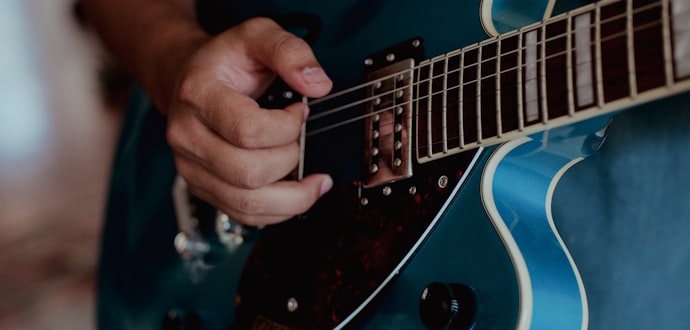
In the Velvet Underground years Lou Reed's main guitar was a black Gretsch Country Gentleman, heard on The Velvet Underground and Nico and White Light/White Heat, including "Heroin." He heavily modified it with Stratocaster pickups, a Vox distortion booster, tremolo and other electronics, turning a classy jazz-country hollowbody into a noise machine. By the end of the 1960s he had switched to an Epiphone Riviera, the guitar he played at Max's Kansas City and on the cover of Transformer.
Later he became a serious gear enthusiast. Through the 1980s and beyond his main instrument was "The Beast," a custom Schecter with a koa body and DiMarzio pickups seen on New York and Songs for Drella. In his final decades he favored a Rick Kelly custom Telecaster with a very thick neck, Steve Klein chambered guitars, a Fender Custom Shop Danny Gatton Telecaster and Steinberger headless models, always chasing a tone that was both clean and ferocious.
Sears Silvertone, Fender Brownface Deluxe, Vox AC100 (later Soldano)
Known for: the overdriven crunch of "I'm Waiting for the Man"
Reed's earliest classic sounds came from cheap and vintage amps. A Sears Silvertone gave "I'm Waiting for the Man" and "Run Run Run" their overdriven crunch, a Fender Brownface Deluxe served him for more than 25 years, and in the late 1960s the Velvets used a Vox AC100 Super Beatle under an endorsement deal, often with a booster and Tone Bender fuzz pushing it into raw distortion.
Later he went high end. On the 1989 New York tour he used a Soldano power amp with custom Pete Cornish cabinets, and in the 2000s Soldano Reverb-O-Sonic and SLO-100 heads plus a Tone King Continental, which he praised for its warm clean tone.
Pete Cornish "Death Pedal" fuzz, Soft Sustain-2, Demeter Tremulator, feedback
Lou Reed worked closely with British effects designer Pete Cornish, who built him a custom remote footboard and a set of unique pedals. His favorite was the Cornish "Death Pedal," a three-stage fuzz designed to sound like a dying tube amp, alongside the Soft Sustain-2, which Reed called the missing sound, and a custom tone boost. A Demeter Tremulator helped him recreate the throbbing Velvet Underground textures of "Heroin," while digital delays, chorus and an Eventide harmonizer added space on later tours. Feedback itself was an effect for Reed, most famously on Metal Machine Music, an album made almost entirely of layered guitar feedback.
Signature Technique
Drone Tuning, Chugging Rhythm and Free-Jazz Feedback
Lou Reed was not a conventional lead guitarist, and that was the point. His playing centered on rhythm and texture: driving, repetitive downstrokes on simple chord patterns that hypnotize rather than impress. "I'm Waiting for the Man" and "Sweet Jane" show how far he could take a few chords with relentless, chugging eighth notes, the direct ancestor of punk rhythm guitar.
Drones were central to his sound. He experimented with tuning strings to the same note, the so-called Ostrich tuning, and leaned on open strings ringing against fretted notes, a technique that fit perfectly with John Cale's droning viola. On "Venus in Furs" and "All Tomorrow's Parties" the guitars create a hypnotic wash, influenced by the minimalism of La Monte Young.
When he did take solos, he treated the guitar like a free jazz horn. Inspired by Ornette Coleman, he played jagged, noisy, atonal bursts full of feedback and distortion, as on "European Son," "I Heard Her Call My Name" and the seventeen-minute "Sister Ray." He used volume and amp overload as instruments, pushing his gear until it screamed, and later made Metal Machine Music entirely from feedback.
His influence is vast. Punk, post-punk, noise rock, shoegaze and indie rock all trace back to his blend of simple rhythm, drone and noise, from the Stooges, Patti Smith and Television to Sonic Youth, R.E.M., the Strokes and countless others. He proved that attitude, sound and songwriting could matter more than virtuosity.
Quick Facts About Lou Reed
What guitar did Lou Reed play?
Lou Reed's signature guitar was the Gretsch Country Gentleman (modified) and Epiphone Riviera, known for the Velvet Underground's noise and drone.
What amp and effects did Lou Reed use?
Lou Reed used Sears Silvertone, Fender Brownface Deluxe, Vox AC100 (later Soldano), known for the overdriven crunch of "I'm Waiting for the Man". Effects included Pete Cornish "Death Pedal" fuzz, Soft Sustain-2, Demeter Tremulator, feedback.
What is Lou Reed's most famous performance?
One of Lou Reed's most celebrated performances is Velvet Underground, Live at Max's Kansas City on August 23, 1970 at Max's Kansas City, New York, New York.
What is Lou Reed known for as a guitarist?
Lou Reed is known as The Velvet Underground's Noise Poet. The signature playing style is Drone Tuning, Chugging Rhythm and Free-Jazz Feedback. Bands and projects include The Velvet Underground, Lou Reed (solo), The Jades, Lou Reed and Metallica (Lulu).
When was Lou Reed born?
Lou Reed was born on March 2, 1942 in Brooklyn, New York City, New York, USA. Lou Reed died on October 27, 2013.