






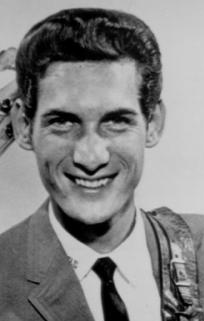

Steve Cropper
Current Ranking
Steve Cropper is ranked #101 of 162 guitarists on the Greatest Guitar Player leaderboard, based on our editorial score until fans weigh in. No fan votes yet, so be the first to rate Steve Cropper on 8 attributes at greatestguitarplayer.com/vote.
Biography
Steve Cropper, born in Missouri in 1941, is one of the most influential rhythm guitarists in the history of American music, the understated genius behind the sound of Stax Records and the soul music that poured out of Memphis in the 1960s. As the guitarist of Booker T. and the MGs, the legendary house band at Stax, Cropper played on and co-wrote an astonishing number of classic soul records, all while perfecting an approach to guitar built on taste, economy, and the perfect placement of every single note.
Cropper's style is a master class in restraint. Rather than flashy solos, he specialized in clean, sharp, perfectly timed Telecaster parts, little rhythmic stabs, sweet double-stop fills, and concise lines that locked into the groove and lifted the song without ever getting in the way of the singer. That economy was its own kind of genius, and it became the template for soul and R&B guitar. As part of the integrated MGs, he helped create the tight, swinging Memphis sound that backed Otis Redding, Sam and Dave, Wilson Pickett, and so many others.
Here is the gem that shows how central he was. Cropper did not just play on these records, he co-wrote many of them, sitting down with the artists to craft the songs themselves. He co-wrote Otis Redding's immortal (Sittin' On) The Dock of the Bay, adding its famous melodic guitar touches, as well as soul standards like Knock on Wood and In the Midnight Hour. To be both the guitarist whose tasteful parts defined a sound and the co-author of some of the greatest soul songs ever written is a remarkable double achievement, and it makes Cropper one of the true architects of the genre.
Later, Cropper reached a whole new audience as a member of the Blues Brothers band, bringing his Stax pedigree and his cool, economical playing to the big screen and the concert stage. A Rock and Roll Hall of Fame inductee, he is revered by guitarists who understand that the hardest and most valuable thing a player can do is serve the song. Steve Cropper proved that you do not need to play a lot of notes to be one of the most important guitarists of your era, you just need to play exactly the right ones, in exactly the right place, every time. He is the quiet master whose tasteful Telecaster helped define the sound of soul.
Legendary Performance
Monterey International Pop Festival with Otis Redding
June 17, 1967 · Monterey County Fairgrounds, Monterey, California
The summer of 1967 belonged to the counterculture, and the Monterey Pop Festival was its coronation. Jimi Hendrix set his guitar on fire. The Who smashed their equipment. Janis Joplin introduced herself to the world. But of all the performances that weekend, the one that most consistently astonishes those who have watched the footage since is the set that Otis Redding delivered on Saturday night, backed by Booker T. & the M.G.'s, and driven, as it always was, by the Telecaster of Steve Cropper. Redding was a soul man playing to a rock audience that had largely never heard him. He converted every single one of them.
Cropper's guitar work throughout the Monterey set was a clinic in the power of what is not played. Where Hendrix and Townshend operated in the language of maximalism, Cropper worked in pure economy: the precise chord stab, the restrained double-stop, the riff that locked into the groove so completely it seemed less like something imposed on the rhythm than something already present in it, waiting to be revealed. His tone, warm, slightly dirty, articulate without being showy, was the sonic signature of Stax Records, and at Monterey it was the anchor that held Redding's volcanic performance in place. Without Cropper's guitar as its spine, the set might have combusted entirely; with it, it became something perfectly controlled and therefore completely devastating.
Six months after Monterey, Otis Redding was dead, killed at twenty-six in a plane crash over Lake Monona, Wisconsin, on December 10, 1967. He and Cropper had recorded "(Sittin' On) The Dock of the Bay" just days before, the song that became the first posthumous number-one record in American chart history. The Monterey performance, captured in D.A. Pennebaker's film, is now the primary document of what Otis Redding was at the height of his powers. For those who know where to listen, it is equally a document of Steve Cropper: the guitarist who understood so completely that his job was to serve the song that he made himself nearly invisible, and in doing so made everything around him extraordinary.
▶ Watch on YouTubeGear
Fender Telecaster (1961)
Steve Cropper's primary instrument, a 1961 Fender Telecaster, is one of the most consequential guitars in soul and R&B history. Its bright, snappy single-coil tone provided exactly what Stax Records' house band needed: a guitar that could cut through a horn section, articulate complex chord voicings on ballads, and lock in rhythmically with Booker T. Jones' organ on uptempo tracks. Cropper played the Telecaster with a clean, precise right-hand technique, flat-picking rhythm chords and single-note fills without any blurring of the lines between them. The Telecaster's clear attack made every note accountable, and Cropper's playing on classics like 'Knock on Wood,' 'Green Onions,' and '(Sittin' On) The Dock of the Bay' demonstrates what happens when the right player and the right instrument find each other.
Fender Super Reverb
Cropper ran his Telecaster into a Fender Super Reverb, a clean, American-voiced combo that provided the headroom necessary for his precisely controlled rhythm playing. He wanted no breakup on the rhythm chords, no smearing of the attack, no compression that would obscure the dynamics of his playing. The Super Reverb's built-in spring reverb added a slight depth to his tone, but his amp settings were otherwise clean and direct. In the Stax studio, the amplifier was often placed close to the live room's acoustic boundaries to add natural ambience without resorting to electronic processing.
Minimal / Clean Signal Chain
Steve Cropper's signal chain was nearly non-existent. Guitar to amplifier, with the Super Reverb's own reverb as the sole processing. This was not a limitation but a philosophy: soul music required clarity and groove, and effects would have obscured both. His 'technique' was his effect, the way he muted strings with his picking hand to create rhythmic accents, the way he targeted specific chord voicings to complement the horn arrangements, the precise control of pick attack to vary from whisper to bark. Cropper remains the definitive example of how much expressive range a guitarist can access with one instrument, one amplifier, and extraordinary control.
Signature Technique
Signature Technique
Steve Cropper invented the vocabulary of soul rhythm guitar, the specific combination of chicken-picking, muted chords, single-note fills, and rhythmic restraint that defines the Stax Records sound. His technique is the musical equivalent of great editing: knowing exactly what to leave out is as important as knowing what to put in. On recordings made with Otis Redding, Sam & Dave, Wilson Pickett, and Booker T. & the MGs, Cropper's guitar never overplays, never competes with the vocals, and never wastes a note.
Cropper's foundational technique is chicken-picking, a combination of fretted notes and immediately palm-muted adjacent strings that produces a percussive, clucking rhythm pattern. This technique requires precise right-hand control: the picking hand must simultaneously strike the intended note and mute unwanted string vibration, producing a tight, staccato rhythm that locks in with the rhythm section without blurring the harmonic content. On Booker T.'s organ-driven grooves, this precision is essential, any muddiness in the guitar would undermine the track's rhythmic clarity.
Cropper's most famous technique, answering vocal lines with short, pointed guitar fills, defines the call-and-response architecture of soul music. On 'Sittin' On The Dock of the Bay,' '(Your Love Keeps Lifting Me) Higher and Higher,' and dozens of other classic tracks, his guitar fills respond to the vocalist's pauses with phrases so perfectly timed and harmonically appropriate that they feel inevitable rather than improvised. This conversational technique requires deep listening and rhythmic anticipation, the guitarist must understand the vocal architecture well enough to know exactly where the fill should begin and end.
Cropper's most important technique is not a physical one but a conceptual discipline: understanding that the guitar's role in a soul arrangement is supportive rather than dominant. His parts are harmonically simple, often just a chord voicing or a two-note combination, but rhythmically precise and perfectly placed in the arrangement. He thinks as an arranger rather than a soloist, asking 'what does this section need?' rather than 'what can I play here?' This orientation, rare in guitar playing, produced some of the most perfectly arranged recordings in American music.