
.jpg)
Prince
Current Ranking
Prince is ranked #4 of 162 guitarists on the Greatest Guitar Player leaderboard, based on our editorial score until fans weigh in. No fan votes yet, so be the first to rate Prince on 8 attributes at greatestguitarplayer.com/vote.
Biography
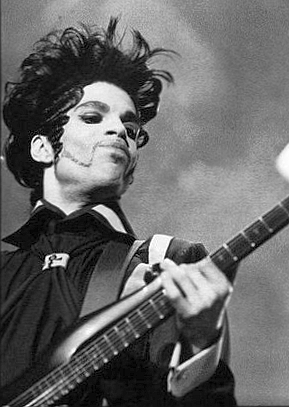
Prince, born Prince Rogers Nelson in Minneapolis in 1958, was one of the most prodigiously talented musicians who ever lived, a singular genius who could write, sing, produce, and play seemingly every instrument at a virtuoso level. The world knew him as a flamboyant pop and funk superstar, a master of image and showmanship, but hiding in plain sight behind the costumes and the hits was one of the greatest electric guitarists of his generation, a fact that even many of his fans underestimated.
Prince's guitar playing combined the raw fire of Jimi Hendrix, the funk precision of players like Nile Rodgers, and a melodic, emotional sensibility entirely his own. He could lay down tight, percussive funk rhythms, then erupt into scorching, expressive solos full of feeling and flash. The extended guitar solo that closes Purple Rain is one of the most beautiful and emotional in all of rock, a soaring, weeping climax that proves how deeply he understood the instrument as a vehicle for pure feeling, and tracks like Let's Go Crazy end in joyous, shredding chaos. He played a series of distinctive custom guitars, including his famous Cloud and Symbol designs, that were as stylish as everything else about him.
Here is the gem that finally made the wider world realize what guitarists already knew. At the 2004 Rock and Roll Hall of Fame ceremony, Prince joined an all-star group performing While My Guitar Gently Weeps in tribute to George Harrison. Standing among rock legends, Prince unleashed a jaw-dropping, transcendent solo that built and built into one of the most electrifying live guitar performances ever captured, leaving the other musicians visibly stunned. Then, in a final flourish of mystery, he tossed his guitar into the air at the end, and it seemingly vanished, never clearly seen landing. That performance has been watched tens of millions of times and stands as definitive proof that Prince belonged among the very greatest guitarists, period.
A second gem speaks to his staggering completeness as a musician. On his debut album and many that followed, Prince played nearly every instrument himself, writing, arranging, and producing the whole thing alone in the studio, with the guitar just one of the many voices he commanded. He could hear an entire record in his head and then perform every part of it, a level of total musicianship almost without parallel.
Prince's catalog of hits, his electrifying live shows, and his fierce independence as an artist made him a global icon, but for guitarists his legacy is that hidden mastery, the reminder that one of the most flamboyant pop stars in history was also a deadly serious guitar virtuoso. A Rock and Roll Hall of Fame inductee, he died in 2016, and the world mourned a once-in-a-generation talent. Prince proved that genius can wear many disguises, and that sometimes the greatest guitar player in the room is the one you least expected.
Legendary Performance
Super Bowl XLI Halftime Show
February 4, 2007 · Dolphin Stadium, Miami, Florida
Prince's Super Bowl XLI halftime performance is the performance against which all subsequent halftime shows are measured, and the guitar playing within it is the specific moment that defines its reputation. The show took place in a heavy rainstorm, Prince refused to postpone or take shelter, and the conditions transformed what might have been a routine stadium spectacle into something genuinely mythological. His guitar solo on a medley culminating in "Purple Rain," played through sheets of rain with the stadium lights cutting through the darkness behind him, is among the most discussed single moments in live television history. The solo itself was not technically unprecedented, it was, by Prince's standards, a restrained performance, but its deployment, its timing, and the theatrical intelligence with which it was placed within the spectacle was the work of an artist who understood that guitar solos are communication rather than demonstration.
The halftime show confirmed for a Super Bowl audience, perhaps 140 million viewers in the United States alone, what the guitar community had known since the early 1980s: that Prince was among the most complete guitarists alive, a player who could produce technically impeccable work without calling attention to the technique, who understood that the most powerful guitar playing was always in service of something larger than itself. His posthumous reputation as a guitarist has grown substantially since his death in 2016, as recordings of his live guitar work have been examined more carefully, but the Super Bowl performance is the moment that made it visible to the widest possible audience.
▶ Watch on YouTubeGear
Custom "Cloud" Guitar by Dave Rusan (1983-present)
Known for: "Purple Rain", Purple Rain, 1984; Super Bowl XLI, 2007
The Cloud Guitar, Prince's most visually and culturally associated instrument, was designed by Prince himself and built by Minneapolis luthier Dave Rusan in 1983 for the Purple Rain film. Its shape is an abstracted, asymmetrical design that suggests a cloud or wind current, painted in white with gold hardware and a tremolo system. The guitar was built to Prince's specific ergonomic and tonal requirements: a comfortable body contour for his performance style, which included extensive movement and choreography, combined with electronics capable of producing the wide range of tones his playing required.
Multiple Cloud Guitars were built over the years, in white, yellow, and blue variations, as working instruments rather than display pieces. Prince used them in studio recording and live performance throughout his career, returning to the design repeatedly as both a visual statement and a functional instrument. The yellow Cloud used at the Super Bowl in 2007 is the most widely seen incarnation of the design, appearing in what many consider the definitive document of his guitar playing.
Various Custom Rigs
Known for: "Let's Go Crazy", Purple Rain, 1984
Prince's amplification setup evolved throughout his career from conventional Marshall and Fender configurations to increasingly customised systems designed by his technical team. His live rig was adjusted for each tour to suit the material being performed, the dance-music production values of his 1980s work required different amplification than the guitar-forward approach of his post-2000 performances.
His relationship with equipment was functional rather than fetishistic, he was known to change guitars and amplifiers throughout performances based on sound requirements rather than attachment to specific instruments. The exception was the Cloud Guitar, which held both practical and symbolic significance. His technical staff maintained a precise and detailed rig to support the flexibility his performance style required.
Whammy Bar & Custom Effects Chain
Prince's whammy bar technique, the most technically discussed element of his guitar playing in technical circles, relied on the vibrato systems installed on his custom guitars, which were calibrated for both smooth vibrato application and extreme dive-bomb usage. His ability to return the guitar to exact pitch after large whammy bar dips, a technique that requires either a locking tremolo system or exceptional mechanical setup, was a notable aspect of his live playing.
His effects chain included various rack-mounted and pedal-based units that allowed him to access the range of tones his genre-spanning playing required. He was known to have strong preferences about specific equipment and was capable of identifying tonal differences that his technical staff would then investigate and resolve. The combination of technical knowledge and musical instinct that characterised his approach to all instruments was as present in his equipment choices as in his playing.
Signature Technique
Whammy Bar Mastery & Multi-Genre Guitar Synthesis
Prince's guitar technique is difficult to categorise because it draws from a wider range of influences than any other guitarist of his generation: the Hendrix-derived whammy bar work, the James Brown-influenced rhythm guitar funk, the jazz chord voicings of artists like Wes Montgomery and Grant Green, and the blues-rock vocabulary of his Minneapolis upbringing. What makes him unusual is not the range of influences but the degree to which he integrated them, his solos move between these styles not as quotations but as a continuous voice, the funk rhythm guitar dissolving into a blues-derived bend that opens into a jazz-informed chord voicing without audible seam. The whammy bar is his most technically discussed implement: he uses it for pitch dips, vibrato enhancement, and the kind of extreme dive-bomb manipulation that extends notes beyond the guitar's normal range, all executed with a precision that makes the bar seem like a natural extension of his fingers.
His rhythm guitar playing, the aspect of his technique least discussed outside the funk tradition, is among the most sophisticated in popular music: tight, syncopated, with specific chord voicings placed at rhythmically precise positions within the beat that create the tension and release that defines funk guitar. The Rock and Roll Hall of Fame induction ceremony in 2004, where he soloed on "While My Guitar Gently Weeps" alongside Tom Petty, Jeff Lynne, and Steve Winwood, is the most widely viewed demonstration of his lead playing in a context designed for close attention rather than spectacle. The solo he played, which he threw his guitar into the air at the end and walked off stage without retrieving, is regularly cited as among the greatest guitar solos ever performed live on television.